
DogMedsHub’s fact-checking policy exists to make medication information traceable, current and honest about its limits. Because dog medication content can influence real decisions, we do not treat factual review as a final proofreading step. It is built into topic selection, sourcing, drafting, editing, updating and correction.
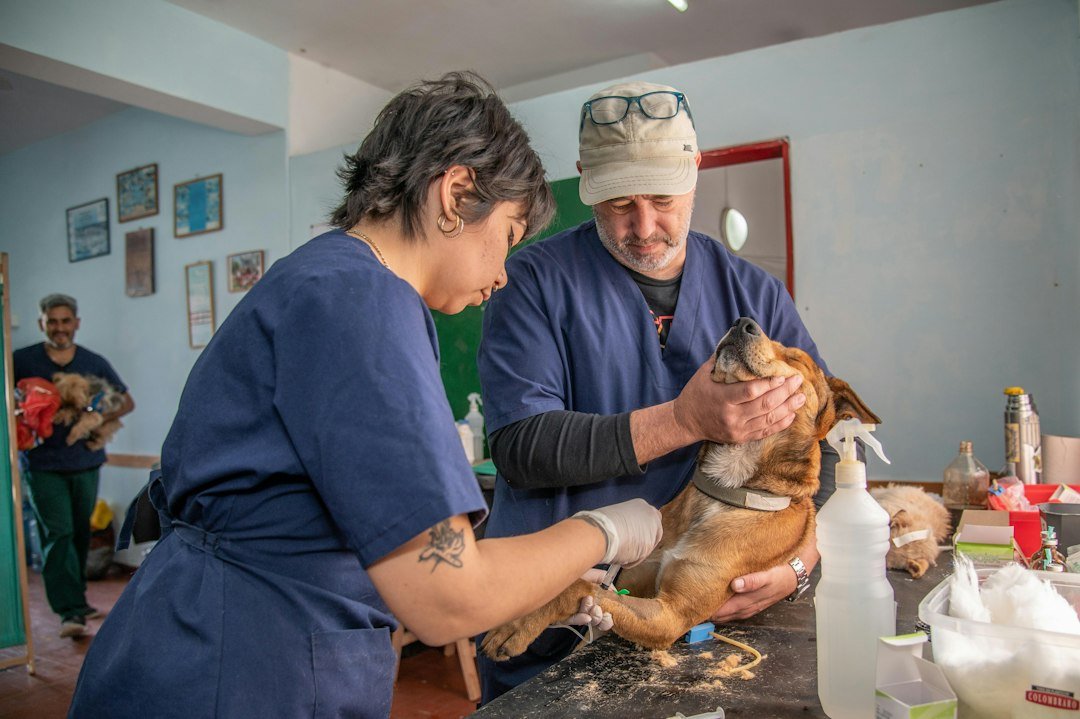
This policy explains what we check, which sources we prefer, how we handle conflicting evidence, how we distinguish established facts from clinical judgment, when content is updated, and how readers can report a possible error.
What “fact-checked” means on DogMedsHub
Fact-checking means that factual claims are compared with appropriate source material before publication and again when a page is materially updated. It does not mean that a page has been individually examined by a veterinarian unless a named veterinary reviewer is actually shown on that page.
DogMedsHub will not use “vet reviewed” or similar wording as a marketing label when no qualified veterinarian reviewed the article.
Our highest-priority facts
Some claims matter more than others. We give extra scrutiny to medication indications, approval status, contraindications, adverse effects, interactions, formulation warnings, age restrictions, toxicity, breed or genetic sensitivity, pregnancy considerations, dose-determining factors and emergency signs.
Primary sources come first when they are available
For veterinary drugs, our preferred starting points include FDA Center for Veterinary Medicine material, official veterinary product labels, regulatory documents, manufacturer prescribing information when it is the primary label source, peer-reviewed veterinary literature and specialist guidelines.
Secondary veterinary references are used to explain context and translate technical material into owner-friendly language.
Why product labels matter
A medication name alone does not always tell the whole story. Different formulations can have different strengths, routes, approved ages, active ingredients and warnings. We check the relevant label or official drug record when product-specific claims are important.
Why Merck Veterinary Manual is useful but not the only source
The Merck Veterinary Manual is a respected veterinary reference and is useful for pharmacology, toxicology and disease context. It is a secondary source, so for high-stakes claims we also look for primary regulatory material, published research or professional guidelines when available.
Professional guidelines
Organizations such as the American Heartworm Society, Companion Animal Parasite Council and specialist veterinary associations publish guidance in areas where clinical management evolves. We use those sources when the page topic falls within their scope.
Peer-reviewed research
Research papers can provide detail that product labels and manuals do not, but one study does not automatically define best practice. We look at study design, population, sample size, relevance to dogs, and whether the result is consistent with broader veterinary guidance.
Why human medical sources are not automatically transferable
Dogs metabolize many medicines differently from people. A human drug label may explain the formulation, but it cannot automatically establish canine dosing, safety or interaction rules.
When a human-approved medicine is used off-label in veterinary medicine, we look for veterinary-specific evidence and references.
How we handle off-label use
Off-label veterinary use is common and can be entirely appropriate when prescribed by a veterinarian. We identify when a medicine is being used outside an FDA-approved canine indication rather than implying that every use is formally approved.
Approval status is stated carefully
“FDA approved,” “human approved but used extra-label,” “veterinary supplement” and “over-the-counter human product” are different categories. We avoid language that blurs them.
How we handle dosage information
DogMedsHub may explain veterinary dose ranges and dosage-by-weight concepts when that information is clinically appropriate and supported by reliable sources. We do not convert those ranges into automatic prescriptions based only on body weight.
Diagnosis, route, formulation, age, organ function, other medicines and treatment goal can change the actual dose.
Why calculators are limited
A calculator can produce mathematically correct output while being medically wrong for the individual dog. Our priority is to explain the variables a veterinarian considers rather than create a false impression of individualized prescribing.
Weight conversion can still be educational
Teaching owners how pounds convert to kilograms or how mg/mL concentration works can improve medication safety. Educational calculation pages should explain arithmetic without telling the reader which prescription dose their dog should receive.
How we fact-check side effects
We distinguish between effects established in labels or trials, post-approval adverse-event reports, and anecdotal complaints. Post-marketing reports can identify possible safety signals but do not always prove causation or frequency.
How we discuss serious adverse events
Rare severe events deserve accurate wording. We avoid implying that a rare event is common simply because it is serious, and we avoid dismissing a serious event because it is uncommon.
How we check interactions
Interaction claims are checked against veterinary pharmacology, product labeling and clinically relevant references. We do not auto-generate every possible drug pair because theoretical interactions without clinical context can confuse readers.
How we handle conflicting sources
Veterinary references may disagree because they were published at different times, refer to different formulations or reflect different clinical contexts. When the disagreement matters, the article should explain it rather than quietly selecting whichever number is easiest to present.
When newer sources take priority
New regulatory warnings, label changes and updated professional guidelines can supersede older references. Publication date, update date and source authority all matter.
When older sources are still useful
Older foundational pharmacology or toxicity research may remain valid when the biological finding has not changed. Age alone does not make a source unusable, but recent safety changes should not be ignored in favor of older summaries.
How we verify medication names
Generic and brand names can be confused, and some brands differ by country. We prioritize active ingredients in titles and explanations and use brand names only when they help readers identify the product.
How we handle international differences
Drug approvals, product strengths and brand availability vary by country. When a statement is specific to the United States or another jurisdiction, the article should say so.
How we verify emergency information
Poisoning and overdose content receives especially careful review because delays can matter. We prioritize toxicology references, poison-control guidance and clear action steps before background explanation.
Why urgent information appears early
An emergency page should not force a reader to scroll through a long SEO introduction before learning whether prompt veterinary care is needed. Reader safety determines the order of information.
What we do not fact-check from competitor blogs
Competitor pages can reveal search demand or reader questions, but they are not our evidence base. We do not treat another dosage blog as proof that a dose, interaction or warning is correct.
Search data and medical evidence are different things
Keyword tools can show that people search for “dosage chart” or “calculator.” That information helps us understand intent. It does not determine what medical advice is safe to publish.
How we use reader questions
Common owner questions help shape FAQs and page sections. The answers are still sourced independently rather than copied from forums or social-media discussions.
AI-assisted drafting does not replace verification
Any drafting tool can produce plausible but incorrect details. Medication claims must be checked against source material before publication. We do not treat generated text as evidence.
Why original synthesis matters
DogMedsHub should add practical value by connecting labels, safety warnings, administration issues, condition context and owner questions. Merely rewriting a source paragraph does not create a useful guide.
How we check internal consistency
A medication page should not say one thing about a missed dose while the safety hub says another without explaining why. We review related pages when a change affects shared guidance.
How we check links
Authority links should go directly to the intended source whenever possible, without unnecessary redirects or unrelated intermediary pages. Broken or changed source links are corrected during review.
How we handle images
Images should be original, appropriately licensed or used under a clear public-domain or permitted license. ALT text should describe the image accurately rather than stuffing keywords.
What gets a clinically reviewed date
A page should display a clinical review claim only when an identifiable qualified reviewer actually completed that review. Otherwise, DogMedsHub may show a general “last reviewed” or “last updated” date referring to editorial/source review.
What happens when a veterinarian reviews an article
The reviewer’s real name, credentials and profile should be shown. The review should focus on medical accuracy, clinical context and safety—not merely approve marketing language.
What happens when no veterinarian reviewed the page
We say so by omission rather than inventing a team credential. Strong sourcing, transparent methodology and clear limits are better than a misleading badge.
Update triggers
A page may be reviewed when a drug label changes, FDA publishes a safety update, a professional guideline changes, an important new study alters the evidence, a product formulation changes, a broken source is found or a reader reports a credible error.
Routine review
High-risk medication and poisoning pages should be revisited periodically even when no specific alert has occurred. Lower-risk educational pages may need less frequent review.
What counts as a material update
Changes to safety warnings, contraindications, indications, interaction guidance, emergency action or dose-determining information are material. Minor spelling or style corrections are not treated as equivalent.
Revision history
For major medication guides, revision history can help readers understand when significant safety or scope changes were made. We will add revision notes where they create useful transparency.
Corrections
When we confirm a meaningful factual error, we correct it promptly and update related content if the error appears elsewhere. Significant corrections may be documented according to our Corrections Policy.
Reader reports
Readers can use the Contact page to flag a possible error, outdated label, broken source or unclear safety statement. Useful reports should include the page URL and the specific passage in question.
Commercial relationships do not decide facts
Affiliate links or future advertising arrangements do not determine which medicine is recommended, how risks are described or which products receive coverage. Editorial decisions should be based on reader value and evidence.
What this policy does not promise
No website can guarantee that every medical statement remains current forever or that general information applies to every dog. Veterinary medicine evolves, and individual patients differ.
The purpose of this policy is to make our process transparent and to create clear ways to identify, verify and correct information.
Related DogMedsHub policies
See the Editorial Policy, Medical Review Policy, Sources & References Policy, Corrections Policy and Medical Disclaimer for the rest of the editorial framework.
How we rank source authority
When several sources address the same claim, we do not treat them as equivalent. Regulatory labeling and primary product information usually carry more weight for approval status, contraindications and official warnings. Specialist veterinary guidelines may carry more weight for current clinical management. Peer-reviewed studies help answer narrower questions, while respected veterinary manuals help explain the broader context.
A commercial blog or retailer does not outrank a regulator or specialist guideline simply because its wording is easier to understand.
How we verify publication dates
Medication safety information can change. We check when a source was published or last updated and whether a newer label or guideline supersedes it. A page may cite an older foundational study while also incorporating newer safety labeling.
How we check formulation changes
Manufacturers can introduce chewable, liquid, injectable or combination versions of a medicine. Those changes can create new inactive ingredients, age restrictions, overdose concerns or administration instructions. When a formulation materially changes, the relevant DogMedsHub guide should be reviewed.
How we handle brand-specific warnings
Some warnings apply to a particular formulation rather than the active ingredient in every context. We try to state that distinction so readers do not assume one product-specific issue automatically applies to every version of the medicine.
How we fact-check tables and charts
Tables can make information look authoritative even when the underlying assumptions are weak. We verify every unit, heading, conversion and range before publication. If a chart could be mistaken for individualized prescribing, the article must explain its limits clearly.
How we verify unit conversions
Medication articles may refer to pounds, kilograms, milligrams and millilitres. Conversion errors can be clinically important, so arithmetic is checked separately from the prose. We avoid mixing product concentration with dose without making the units explicit.
How we handle uncertainty
Evidence is not always complete. When a risk is based mainly on case reports, post-marketing reports or limited studies, we say so. Uncertainty should be visible rather than hidden behind confident wording.
How we distinguish frequency from seriousness
A severe adverse event can be rare. A common adverse effect can be mild. We try not to collapse those two ideas into one alarming list. Readers deserve to understand both how serious an event can be and how well its frequency is known.
How we review quotations and paraphrases
DogMedsHub summarizes source material in original language rather than reproducing long passages. Direct quotations are used sparingly, and the surrounding explanation should add practical context for dog owners.
How we fact-check commercial claims
Marketing phrases such as “fast acting,” “broad spectrum” or “all natural” are not accepted at face value. We check what the label, evidence or product mechanism actually supports.
How advertising and affiliate relationships are separated from verification
A product does not receive more favorable wording because it is commercially available through an affiliate program or because advertising appears on the site. The fact-checking process should produce the same safety conclusion regardless of monetization.
How structured data is checked
Metadata and schema should match visible page content. We do not mark a page as medically reviewed unless the visible article identifies a real reviewer, and we do not create rating or review markup that is not actually present for readers.
How we handle reader-submitted experiences
A reader’s experience can alert us to a question worth investigating, but it is not automatically evidence of causation. We use reports as prompts to check labels, adverse-event information or literature rather than publishing the anecdote as proof.
Priority of corrections
Errors involving toxicity, contraindications, interactions, dosing logic, emergency action or approval status receive higher priority than typographic or style issues. If a high-risk error is confirmed, related pages are checked for the same problem.
How we handle broken or retired products
If a product is discontinued, withdrawn or replaced, we update the page so readers are not misled by outdated availability. The underlying active-ingredient guide may remain useful even when a brand disappears.
How we avoid false freshness
Changing a comma or adding a sentence does not justify presenting an article as newly medically reviewed. Update dates should reflect meaningful editorial or factual review, not cosmetic edits designed to make a page look newer.
How fact-checking supports the knowledge graph
When one fact changes—such as a new warning for a medicine—we review the canonical drug guide first, then the relevant pillar, interaction, condition, poisoning or safety pages that repeat or depend on that information. This keeps the site internally consistent rather than correcting only one isolated URL.
Last updated: October 2026.