
Giving liquid medication to a dog safely depends on more than getting the syringe into the mouth. Owners need to confirm the drug, concentration, measured volume, whether the bottle must be shaken, how the medicine should be stored, whether it can be given with food, and what to do if the dog spits out or vomits part of the dose.
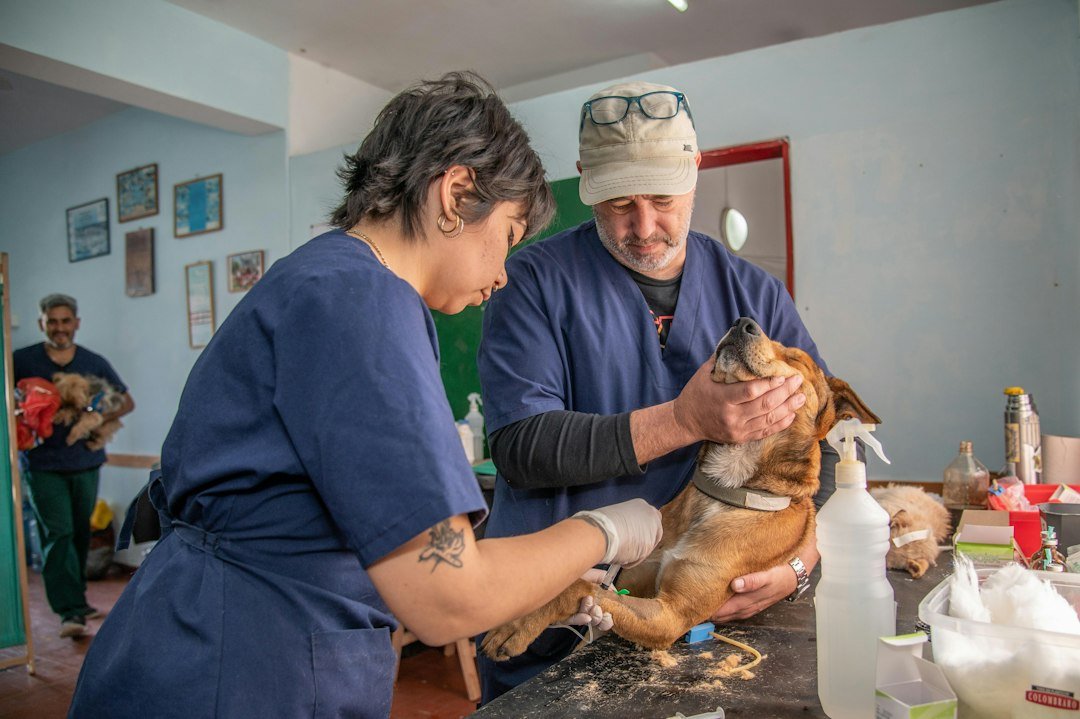
This guide explains how to measure and give oral liquid medicine, how to read syringe markings, why concentration matters, how to reduce aspiration and spitting, and how to handle partial doses without accidentally overdosing.
Check the label before every new bottle
Confirm the active ingredient, concentration and prescribed volume. Refills and compounded products can change concentration.
Shake when instructed
Suspensions can settle. If the label says “shake well,” mix the bottle before drawing every dose.
Use the supplied oral syringe
An oral syringe is more accurate than a kitchen spoon and easier to control than pouring liquid from a cup.
Choose the right syringe size
Small doses need small syringes. Measuring 0.4 mL in a 10 mL syringe is unnecessarily imprecise.
Understand the markings
Check what each line represents before drawing up the medicine. Do not assume every syringe uses the same increments.
Remove large air bubbles
Air reduces the actual liquid volume. Draw the dose slowly and tap the syringe if needed.
Keep the dog in a stable position
For most dogs, standing or sitting upright is safer than lying on the back. The goal is calm swallowing, not force.
Approach from the side of the mouth
Slip the syringe into the cheek pouch behind the canine teeth rather than aiming straight down the throat.
Give the liquid slowly
Press the plunger gradually so the dog has time to swallow. Rapid squirting can increase coughing, gagging and aspiration risk.
Do not aim directly at the back of the throat
Forcing liquid toward the airway can cause aspiration, especially in brachycephalic, weak or neurologically impaired dogs.
Allow pauses
Large volumes can be given in small portions with time to swallow between them.
What if the dog spits some out?
Do not automatically repeat the full dose. The dog may have swallowed part of it.
What if the dog foams or drools?
Bitter medicines can cause dramatic salivation. This does not always mean the dose was lost or the dog is having an allergic reaction.
What if the dog coughs?
Stop administering until the dog has recovered. Persistent coughing, breathing difficulty or suspected aspiration deserves veterinary attention.
What if the dog vomits?
Do not automatically redose. Some medication may already have been absorbed.
Can liquid medicine be mixed with food?
Only when the medication can be given with food and the dog will eat the entire small portion. Mixing a dose into a full bowl risks partial consumption.
Use a small food portion first
If food mixing is allowed, place the medication in a small amount the dog reliably finishes, then offer the rest of the meal.
Do not mix every medication into dairy
Some drugs interact with minerals or have specific food instructions. Follow the medication-specific advice.
Compounded flavours
Compounding pharmacies may offer chicken, beef or other flavours to improve acceptance. The concentration still needs to be checked carefully.
Human liquid formulations
Human syrups may contain xylitol or other ingredients unsafe for dogs. Never substitute a human liquid simply because the active ingredient matches.
Why xylitol is dangerous
Xylitol can cause profound hypoglycemia and liver injury in dogs. Check the inactive ingredients of sugar-free liquids.
Refrigeration
Some liquids require refrigeration; others should remain at room temperature. Follow the pharmacy label.
Do not freeze unless instructed
Freezing can alter stability or suspension characteristics.
Keep the bottle tightly closed
Evaporation or contamination can change product quality over time.
Beyond-use dates
Compounded and reconstituted liquids may expire sooner than tablets. Discard them according to pharmacy instructions.
Why old antibiotics should not be reused
Leftover suspension may have expired and the new illness may not require the same drug. Reusing old liquid can delay diagnosis and encourage inappropriate antibiotic use.
How to clean the syringe
Follow pharmacy instructions. Many oral syringes can be rinsed with warm water and air dried, but not all products or devices are identical.
Do not share syringes between medicines
Separate syringes reduce contamination and measurement confusion.
Do not use the medicine cap as a measuring cup unless calibrated
Caps are often not designed for accurate dosing.
How concentration connects to volume
The same milligram dose can require different millilitre volumes depending on the product concentration. See mg/mL Concentration Explained.
What if the pharmacy changes concentration?
The volume must be recalculated by the prescriber or pharmacist. Never keep using the old mL instruction automatically.
What if the label says 250 mg/5 mL?
That equals 50 mg/mL. Do not read it as 250 mg in every millilitre.
What if the dose is less than 1 mL?
Use an appropriately small syringe so the volume can be measured precisely.
What if the dose is very large?
Ask whether the concentration can be increased or another formulation used. Forcing a large liquid volume can increase stress and aspiration risk.
Dogs that bite during medication
Do not force administration if handling is unsafe. Ask about a different formulation, flavour, capsule, chew or administration technique.
Brachycephalic dogs
Flat-faced dogs may have greater airway-management challenges. Give liquid especially slowly and keep the head in a natural position.
Dogs with swallowing problems
Neurologic disease, esophageal disorders and severe weakness can increase aspiration risk. Oral liquid administration may need veterinary supervision or another formulation.
Puppies
Small volumes require precise measurement. Re-weigh growing puppies when prescriptions are weight based.
Senior dogs
Dental disease, cognitive change or swallowing difficulty can alter how easily a senior dog accepts liquid medicine.
What if the dog refuses every attempt?
Tell the clinic rather than missing repeated doses. Another formulation may be available.
What if the bottle spills?
Contact the pharmacy if there will not be enough medicine to complete the course. Do not dilute the remaining product.
What if the label rubs off?
Do not keep using an unidentified liquid. Contact the pharmacy for confirmation or replacement.
Traveling with liquid medication
Keep it in the original labelled bottle, maintain required temperature and pack the measuring syringe separately in a clean container.
Air travel
Carry essential medication in hand luggage when possible and follow airline/security rules for liquids. Keep a copy of the prescription.
Medication administration log
Record each dose immediately after giving it. Liquid bottles can make it harder to estimate how many doses remain, so written tracking is useful.
Signs of a dosing error
Unexpected sedation, agitation, vomiting, weakness, neurologic change or another major reaction after liquid medication warrants veterinary advice.
When to stop and call
Call when the concentration is unclear, the wrong syringe was used, the dog received too much, a large amount was swallowed accidentally, or repeated vomiting prevents reliable administration.
Related DogMedsHub guides
See mg/mL Concentration Explained, Wrong Dose, Missed Dose and Medication Safety.
Training the dog before medication is needed
Dogs can learn to accept an empty syringe with a small amount of water or dog-safe liquid reward before they ever need medicine. Cooperative-care practice reduces restraint and stress later.
Pairing the syringe with something positive
Brief handling followed by a treat can help dogs that are mildly reluctant. Do not use a food reward that conflicts with the medication’s empty-stomach instructions.
Why restraint can make future doses harder
Forcing the mouth open aggressively may work once but create stronger avoidance next time. A calmer side-of-mouth technique is usually more sustainable.
Two-person administration
For a cooperative but wiggly dog, one person can stabilize the body while another gives the liquid. Avoid squeezing the neck or restricting breathing.
When a towel wrap can help
Small dogs can sometimes be gently wrapped to control paws, but the chest and airway must remain unrestricted. Stop if the dog panics or struggles dangerously.
When a muzzle is not appropriate
A closed muzzle prevents normal swallowing and should not be used while liquid is being administered. Bite-risk dogs need a veterinarian-approved alternative plan.
Why aspiration is the main administration hazard
Liquid entering the airway can cause coughing, respiratory distress or aspiration pneumonia. Slow delivery into the cheek pouch reduces risk.
Signs of possible aspiration
Persistent coughing, rapid breathing, laboured breathing, fever or lethargy after a choking episode warrants veterinary evaluation.
Do not tilt the head far backward
Keeping the head in a natural or slightly elevated position supports safer swallowing.
Large-volume medications
If the prescribed amount is several millilitres, divide it into small portions with pauses rather than squirting everything at once.
Very bitter medications
Bitter taste can trigger drooling, head shaking and refusal. Ask whether flavouring, capsules or another formulation is available.
Sticky suspensions
Some compounded liquids cling to the syringe or mouth. Draw accurately and allow time for the dog to swallow the full amount.
Oil-based liquids
Oil-based formulations may behave differently from water-based suspensions and may be harder to wash from syringes. Follow pharmacy cleaning instructions.
Giving medicine after dental surgery
Mouth pain can make syringe administration uncomfortable. Ask the veterinarian where to place the syringe and whether a different formulation is preferable during healing.
Dogs with jaw pain
Temporomandibular or oral disease can make mouth handling painful. Do not force the jaw open.
Esophageal disease
Dogs with megaesophagus or swallowing disorders may need special medication techniques because regurgitation and aspiration risk are higher.
Neurologic weakness
A dog with poor swallow reflex should not be given routine oral liquid without veterinary advice.
What if the dog clamps the mouth shut?
Do not pry forcefully. Ask about another flavour, concentration, capsule or injectable alternative.
Why smaller-volume formulations can improve adherence
If a dog hates a large volume, a more concentrated formulation may reduce stress while delivering the same prescribed milligram amount.
Why more concentrated is not automatically better
For tiny dogs, a very concentrated liquid can make accurate measurement harder. The best concentration balances volume and precision.
Giving multiple liquids
Do not mix several medicines in one syringe unless the veterinarian or pharmacist confirms compatibility. If the dog spits out the mixture, you will not know how much of each drug was received.
Spacing multiple medications
Some drugs can be given together, while others need separation because of food or absorption interactions. Follow the medication schedule.
Medication after meals
If the medicine should be given with food, administer at the prescribed time relative to the meal rather than assuming any feeding schedule is acceptable.
Medication before meals
For empty-stomach drugs, keep the required interval before and after food.
What if the dog will only take it in food?
Tell the veterinarian. A medication that technically should be given on an empty stomach may need a different formulation if the only practical method conflicts with that requirement.
Rinsing the syringe after sticky medications
Use the pharmacy-recommended method. Residue can alter future measurements if the barrel becomes sticky.
Replace worn syringes
Faded markings and loose plungers reduce accuracy. Pharmacies can usually provide replacements.
Label each syringe
When several liquids are used, mark the syringe with the medication name to avoid cross-use.
Medication at boarding facilities
Provide the original bottle, labelled syringe, written dose and emergency instructions. Do not send pre-filled unlabelled syringes unless the facility specifically accepts them and the veterinarian approves.
Travel refrigeration
Use an insulated container when required, but avoid direct contact with ice if freezing would damage the product.
Checking supply before travel
Calculate how many millilitres are needed for the trip and carry extra only as appropriate. Do not transfer medication into an unlabelled travel bottle.
What if a dose is missed because administration failed?
Follow the same principles as other missed doses. See Missed Dog Medication Dose.
What if too much liquid was given?
Treat it as a wrong-dose event and contact the veterinarian with the concentration and volume. See Wrong Dose.
Why oral liquid technique matters for antibiotics
Antibiotic suspensions often rely on consistent shaking and accurate measurement. Missing part of the dose repeatedly because the dog spits it out can reduce treatment reliability and make it hard to judge whether the medicine is working.
Why oral liquid technique matters for behavior medicines
Compounded behavior medications may be highly concentrated to reduce volume. That makes correct syringe selection and concentration checking especially important.
Why oral liquid technique matters for pain medicine
Some liquid NSAIDs use weight-marked syringes or product-specific dosing devices. Do not substitute a generic syringe without understanding how the markings translate to the prescribed amount.
Product-specific dosing syringes
Certain veterinary liquids are supplied with syringes marked by body weight rather than millilitres. Those devices are designed for that exact product concentration. Do not use them with another medication.
What if the supplied syringe is lost?
Ask the pharmacy or clinic for a replacement. Do not guess using a household spoon or another product’s weight-marked syringe.
What if the dog bites the syringe?
Inspect it for cracks before reuse. Damaged plastic can leak, alter measurement or create sharp edges.
Why flavour changes can matter after a refill
A dog may accept one compounded flavour and reject another. If administration suddenly becomes difficult after a refill, check whether flavour, concentration or texture changed.
Why the first successful technique should be repeated consistently
Dogs learn routines quickly. Using the same quiet location, body position and reward can make repeated dosing easier than changing methods every day.
When a pill may be easier than liquid
Some dogs fight liquid but readily take a tablet in food. If both formulations are medically appropriate, ask whether switching would improve adherence.
When liquid may be easier than a pill
Tiny dogs, dogs needing unusual strengths, or dogs that cannot swallow tablets may benefit from a liquid. The best formulation is the one that can be measured accurately and given consistently.
What if medication stains the fur?
Wipe away residue with a damp cloth if the product allows. Prevent the dog from licking large amounts off the coat.
What if the medicine gets in the eyes?
Rinse as directed and contact the veterinarian or poison service if the product is irritating or the dog shows eye pain. Oral formulations are not intended for ocular exposure.
What if several doses are missed because administration is impossible?
Contact the veterinarian before the treatment fails. Repeatedly struggling at home is a sign that the formulation or technique needs to change.
Last reviewed: October 2026. Educational information only; follow the exact label and veterinary instructions for the specific liquid medication.