
Amoxicillin-clavulanate is a prescription antibiotic combination used in dogs for selected bacterial infections when the likely or confirmed organism is susceptible. It combines amoxicillin, a beta-lactam antibiotic, with clavulanate, a beta-lactamase inhibitor that helps protect amoxicillin from certain bacterial resistance enzymes. The combination can broaden activity compared with plain amoxicillin, but it is not automatically a “stronger” or better choice for every infection.
Dog Medication Math Calculator
Enter your dog’s current body weight, then use only the dose already provided by your veterinarian or pharmacy label. The calculator converts lb/kg and can work out mg and liquid mL. It does not choose or recommend a dose.
Dose information from your veterinarian
Optional liquid conversion
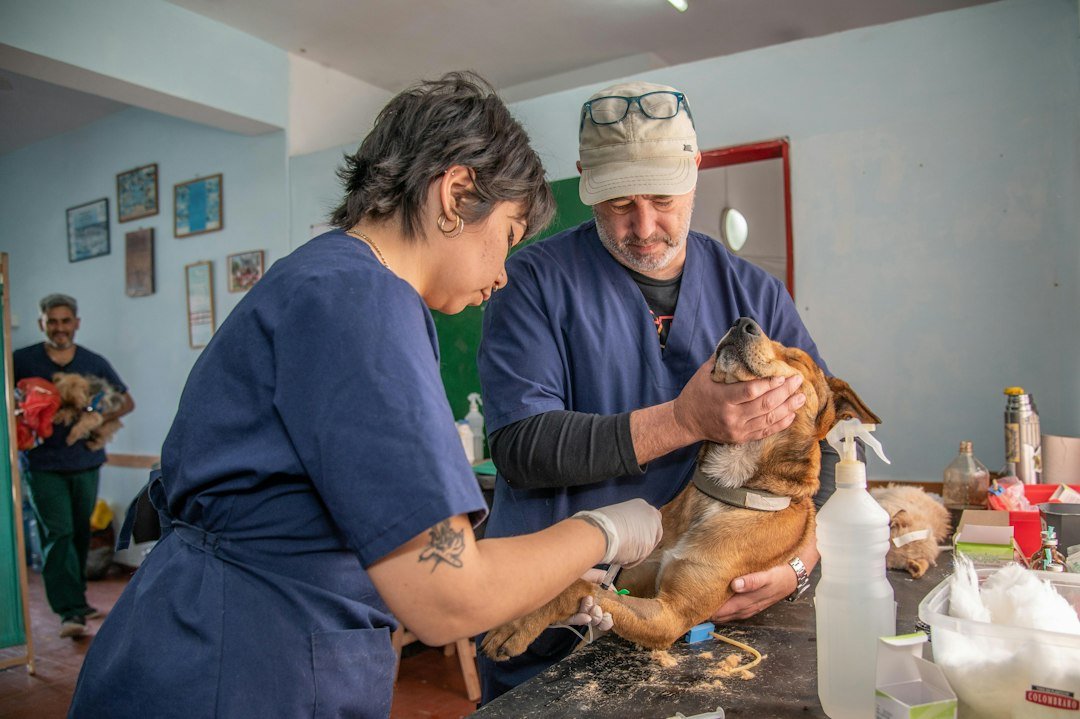
This guide explains why veterinarians prescribe amoxicillin-clavulanate, how the clavulanate component changes the drug, which infections may be treated, why culture sometimes matters, how food can affect tolerance, what side effects owners should watch for, and why leftover human or veterinary antibiotics should never be reused for a new illness.
What amoxicillin-clavulanate is
Amoxicillin belongs to the aminopenicillin group of beta-lactam antibiotics. Clavulanate is not used mainly for its own antibacterial effect; it inhibits certain beta-lactamase enzymes that some bacteria produce to break down beta-lactam antibiotics.
Why clavulanate is added
Some bacteria that resist plain amoxicillin through beta-lactamase production may become susceptible when clavulanate protects the amoxicillin molecule.
Why this does not overcome every form of resistance
Resistance can arise through altered penicillin-binding proteins, permeability changes, efflux mechanisms and other pathways that clavulanate does not fix.
Why the drug is not automatically better than amoxicillin alone
If a narrow-spectrum drug will treat the infection reliably, using broader coverage may expose more of the normal microbiome without added benefit.
Common infection types veterinarians may treat
Depending on culture, local resistance patterns and the dog’s clinical condition, the combination may be used for skin and soft-tissue infections, wound infections, dental infections, urinary infections and selected respiratory infections.
Why infection site matters
An antibiotic must reach the infected tissue at an effective concentration. A drug that is suitable for a superficial wound is not automatically the best option for prostate, bone or lung infection.
Why skin infections need underlying-cause control
Antibiotics may clear a bacterial flare, but recurrent pyoderma often returns if allergy, parasites or endocrine disease remains uncontrolled.
Why bite wounds may need more than antibiotics
Punctures can trap bacteria and devitalized tissue below the skin. Clipping, flushing, drainage and wound exploration may be as important as the drug choice.
Why dental infections need source control
An infected or fractured tooth is not permanently cured by antibiotics. Definitive dental treatment may still be required.
Why urinary infections should be diagnosed carefully
Frequent urination, straining or blood in the urine can occur with infection, stones or inflammation. A urine culture is particularly useful in recurrent or complicated cases.
Why culture can prevent unnecessary broad-spectrum treatment
Culture identifies the organism and susceptibility testing helps determine whether plain amoxicillin, amoxicillin-clavulanate or a different antibiotic is most appropriate.
Why empirical treatment is sometimes started before culture returns
In a clinically important infection, veterinarians may begin a rational first-line antibiotic and adjust once laboratory results are available.
Why “susceptible” does not guarantee success
Abscesses, foreign bodies, biofilm, poor tissue penetration and missed doses can cause treatment failure even when the laboratory result looks favorable.
How the drug works
Amoxicillin interferes with bacterial cell-wall synthesis. It works best against actively growing susceptible bacteria.
Why beta-lactams are generally time-dependent
Clinical effectiveness depends on maintaining drug exposure above the organism’s susceptibility threshold for enough of the dosing interval.
Why scheduled dosing matters
Repeatedly late or missed doses can create longer periods when antibiotic concentrations fall below the intended range.
Why a missed dose should not automatically be doubled
Follow the label or prescribing veterinarian’s instructions. See Missed Dose.
Why double dosing is not a fix for poor adherence
Extra medication can increase GI effects without reconstructing the intended exposure pattern.
Can amoxicillin-clavulanate be given with food?
It is often given with food to improve stomach tolerance, but owners should follow the specific veterinary prescription.
Why food can reduce nausea
A small meal can reduce direct gastric irritation for some dogs.
Why food does not make every side effect harmless
Repeated vomiting, severe diarrhea, facial swelling or collapse still needs attention even if doses are given with meals.
Common side effects
Vomiting, soft stool, diarrhea and reduced appetite are among the more common adverse effects seen with this class.
Why clavulanate can contribute to GI upset
Some dogs tolerate plain amoxicillin more easily than the combination, although individual response varies.
What to do if the dog vomits
Do not automatically repeat the full dose because absorption may already have begun. See Dog Vomiting After Antibiotics.
What to do if diarrhea develops
Mild stool changes may be monitored according to veterinary instructions, while repeated watery diarrhea, blood, vomiting or lethargy should prompt contact. See Dog Diarrhea After Antibiotics.
Why probiotics may be considered
Selected veterinary probiotics can support GI tolerance in some dogs, but they do not replace reassessment if diarrhea is severe.
Why the microbiome matters
Broad-spectrum antibiotics alter normal intestinal bacterial communities as well as the target pathogen.
Why unnecessary treatment creates collateral effects
GI upset, microbiome disruption and selection pressure occur even when no bacterial infection was present to benefit from the drug.
Allergic reactions
Penicillin-class drugs can trigger hypersensitivity reactions in susceptible animals.
Signs that suggest allergy rather than ordinary GI intolerance
Hives, facial swelling, breathing difficulty or collapse raise greater concern for an immune-mediated reaction.
Why breathing difficulty is an emergency
Airway swelling or anaphylaxis can progress rapidly and requires immediate veterinary treatment.
Why vomiting alone does not prove allergy
GI intolerance is much more common than true anaphylaxis and should be interpreted in context.
Why kidney function matters
Beta-lactam antibiotics are substantially cleared through the kidneys, so severe renal impairment can change drug exposure and may require dose adjustment.
Why hydration still matters
Dehydration can worsen kidney stress and make oral medication harder to tolerate.
Why liver disease still belongs in the medication history
Although renal elimination is important, medically complex dogs can process and tolerate medications differently overall.
Why senior dogs may need closer monitoring
Older dogs more commonly have kidney disease, GI sensitivity and multiple concurrent medications.
Why puppies need accurate current weights
Rapid growth can make an old weight inaccurate during a longer treatment course.
Amoxicillin-clavulanate dosage by weight: general reference and skin-infection context
Current Merck pharmacology references list amoxicillin-clavulanate in dogs at 12.5–25 mg/kg by mouth every 8–12 hours. For canine pyoderma, Merck lists 12.5–25 mg/kg every 12 hours as a first-tier regimen when the infection and susceptibility pattern fit.
| Reference context | Published canine range | Meaning |
|---|---|---|
| General penicillin reference | 12.5–25 mg/kg PO every 8–12 hours | Broad reference; organism and infection site matter. |
| Canine pyoderma | 12.5–25 mg/kg PO every 12 hours | First-tier skin-infection context in appropriate cases. |
See the Merck penicillin reference and Merck pyoderma guidance. Weight helps calculate the dose, but diagnosis, organism and infection site determine whether the drug should be used at all.
If a veterinarian has already supplied a confirmed mg/kg instruction or total milligram amount, DogMedsHub’s dosage calculator can check arithmetic. It cannot decide whether culture is needed, whether kidney disease changes the plan or whether another antibiotic is safer.
Why tablets and liquids need different checking
Compounded liquids can come in different concentrations. Always verify mg/mL rather than copying an old millilitre instruction.
Why old bottles should not be reused
The concentration, expiration date and original treatment plan may no longer match the current problem.
Why leftover antibiotics should not be saved “for next time”
Future symptoms may have a different cause or organism, and incomplete leftover quantities encourage inadequate treatment.
Why human amoxicillin-clavulanate should not be substituted casually
The active ingredients may overlap, but tablet strength, formulation and veterinary dosing still require professional direction.
Why antibiotic resistance matters
Using broad-spectrum antibiotics unnecessarily selects for resistant bacteria in the individual dog and the wider environment.
Why amoxicillin-clavulanate is not a solution for every resistant infection
Some bacteria carry resistance mechanisms that clavulanate cannot overcome.
Why culture is especially useful after treatment failure
Repeated empirical switching can increase resistance pressure without identifying why the first treatment failed.
Why treatment failure may not be resistance
An abscess may need drainage, an infected implant may have biofilm, a wound may contain foreign material, or the original diagnosis may be wrong.
Why source control matters as much as the antibiotic
Removing pus, damaged tissue, a diseased tooth or foreign material can be essential for cure.
Why recurrent skin infection should trigger allergy assessment
Repeatedly prescribing antibiotics without controlling the skin disease leads to recurrence and resistance pressure.
Why recurrent urinary infection deserves investigation
Bladder stones, diabetes, Cushing’s disease, incontinence and prostate disease can drive repeated infection.
Why repeated antibiotic courses are not a long-term prevention plan
Preventing recurrence requires correction of the underlying factor whenever possible.
Drug interactions
Amoxicillin-clavulanate does not have the same dramatic interaction profile as NSAIDs or serotonergic drugs, but the full medication list still matters.
Why methotrexate and other specialized drugs should be disclosed
Beta-lactams can alter handling of some medications, making specialist review important in medically complex patients.
Why all supplements should be listed
Supplements can contribute to GI symptoms and confuse the assessment of medication tolerance.
Why oral contraceptives are irrelevant to canine use but human household exposure still matters
Human medication warnings do not always translate directly to dogs, which is why pet-specific advice is important.
How long should improvement take?
The answer depends on infection site, severity, source control and susceptibility. See How Long Do Antibiotics Take to Work in Dogs?.
Why feeling better does not automatically mean treatment is complete
Clinical signs often improve before infected tissue has fully healed.
Why treatment duration should be individualized
Modern antimicrobial stewardship favors the shortest effective course for the specific infection rather than arbitrary prolonged treatment.
Why stopping early without guidance can still be harmful
If the infection still requires therapy, premature discontinuation can lead to relapse or persistent disease.
Why the veterinarian may appropriately stop or change therapy early
Culture results, a changed diagnosis or adverse effects can justify a revised plan.
Why “always finish every antibiotic no matter what” is incomplete advice
The correct instruction is to follow the veterinarian’s current plan and contact the clinic if side effects or new diagnostic information arise.
What if a dose is accidentally doubled?
Contact the veterinarian with the exact formulation, amount and timing rather than waiting for GI signs. See Double Dose.
What if the wrong dog receives the medication?
Weight, allergy history, kidney disease and other drugs can change risk. See Wrong Medication.
Why secure storage matters
Flavored tablets can be eaten in large quantities if bottles are left accessible.
Why original packaging should be kept
It gives the veterinarian the exact strength, formulation and dispensing information in an emergency.
When to call the veterinarian
Repeated vomiting, significant diarrhea, refusal of food, worsening infection signs or inability to give the medicine reliably deserves same-day advice.
When urgent care is appropriate
Facial swelling, breathing difficulty, collapse, severe weakness, black stool or blood in vomit requires prompt evaluation.
What owners should track
- dose and time given;
- whether the dose was given with food;
- appetite and water intake;
- vomiting or diarrhea;
- skin rash or facial swelling;
- signs of the original infection;
- missed doses;
- other medications and supplements.
How this page fits DogMedsHub
This is the main medication page for amoxicillin-clavulanate. Class-level stewardship remains on Antibiotics for Dogs, while bacterial-disease context remains on Bacterial Infections in Dogs.
The Merck Veterinary Manual discussion of penicillins describes beta-lactam mechanisms, susceptibility and clinical selection principles that support targeted use rather than automatic broad-spectrum prescribing.
Why the clavulanate component changes stewardship decisions
Clavulanate expands activity against selected beta-lactamase producers, but that broader coverage also means the combination should not be chosen automatically when plain amoxicillin would work. Matching the narrowest effective spectrum to the infection reduces unnecessary microbiome disruption.
Why recurrent skin disease often needs culture before repeating this drug
Repeated courses can select resistant staphylococci, including methicillin-resistant strains. Cytology and culture can show whether another organism or a nonbacterial problem is now driving the lesions.
Why chronic ear disease is not a routine oral-antibiotic problem
Ear infections usually need otoscopy, cytology, cleaning and topical treatment. Oral amoxicillin-clavulanate may add little if the organism or infection location is not appropriate.
Why urine sampling method matters
Free-catch samples can be contaminated by skin or genital bacteria. Cystocentesis often provides a cleaner culture when confirming a UTI matters.
Why uncomplicated and complicated UTIs are different
A first simple lower urinary infection in an otherwise healthy dog is not managed the same way as recurrent infection in a dog with stones, diabetes, incontinence or prostate disease.
Why dental swelling can recur after a course
Antibiotics may reduce surrounding inflammation temporarily, but a diseased root can remain infected until definitive dental treatment removes the source.
Why deep wounds may require culture even if they look small
Bite punctures and penetrating injuries can create low-oxygen pockets that favor mixed bacterial populations, including anaerobes.
Why fever that persists despite treatment matters
Ongoing fever can indicate inadequate coverage, an undrained source, resistant bacteria or a nonbacterial diagnosis and should prompt reassessment.
Why appetite returning is useful but not enough
Improved appetite is encouraging, but the specific infection signs—urination, wound drainage, swelling, cough or fever—should also be improving.
Why a dog can feel better before the infection is controlled
Inflammation may improve quickly while bacteria remain in deeper tissue, which is why duration should follow the infection and clinical response rather than owner impression alone.
Why severe diarrhea should not be managed by simply adding metronidazole
A second antibiotic can intensify dysbiosis. The better question is whether amoxicillin-clavulanate is still necessary, whether the original diagnosis is correct and whether supportive GI care is needed.
Why formulation consistency matters
Different veterinary and compounded products can contain different amoxicillin-to-clavulanate ratios or concentrations, so one label’s directions should not be transferred to another product.
Why splitting tablets requires caution
Some scored tablets divide predictably while others may not, and combination-drug ratios should remain consistent. Follow the specific product instructions.
Why taste can affect adherence
Dogs that repeatedly spit out tablets may receive partial or inconsistent doses. A different formulation can be more reliable than forcing a poorly accepted tablet.
Why long courses should include a recheck
Deep infection treated for weeks should not be allowed to continue indefinitely without confirming that lesions, pain, laboratory findings or imaging are actually improving.
Why response failure should trigger culture instead of automatic escalation
Moving from one broad drug to another without identifying the organism can increase resistance pressure while missing the true reason treatment failed.
Why the underlying disease may be more important than the antibiotic
Allergy, stones, endocrine disease, dental disease and foreign bodies can repeatedly create bacterial problems until they are addressed.
Why antimicrobial resistance is relevant to household health
Resistant bacteria can be carried on skin or in the gut and may spread between animals and people, especially where wounds or medical vulnerability are present.
Why hand hygiene matters during wound treatment
Owners should wash hands after handling draining wounds, used dressings or contaminated bedding, particularly when culture identifies resistant organisms.
Why improvement should have a planned checkpoint
Ask the prescribing veterinarian when the dog should begin improving and what signs should trigger an earlier recheck. A treatment plan is safer when the expected response is explicit.
Last reviewed: October 2026. Educational information only; amoxicillin-clavulanate should be used for a defined bacterial indication under veterinary direction.