
Clindamycin is a prescription lincosamide antibiotic used in dogs for selected bacterial infections, particularly when susceptible gram-positive or anaerobic organisms are involved. It is commonly associated with dental and oral infections, infected wounds, deep skin or soft-tissue disease, and some bone infections. It is not a universal “strong antibiotic,” and it should not be chosen simply because another drug failed.
Dog Medication Math Calculator
Enter your dog’s current body weight, then use only the dose already provided by your veterinarian or pharmacy label. The calculator converts lb/kg and can work out mg and liquid mL. It does not choose or recommend a dose.
Dose information from your veterinarian
Optional liquid conversion
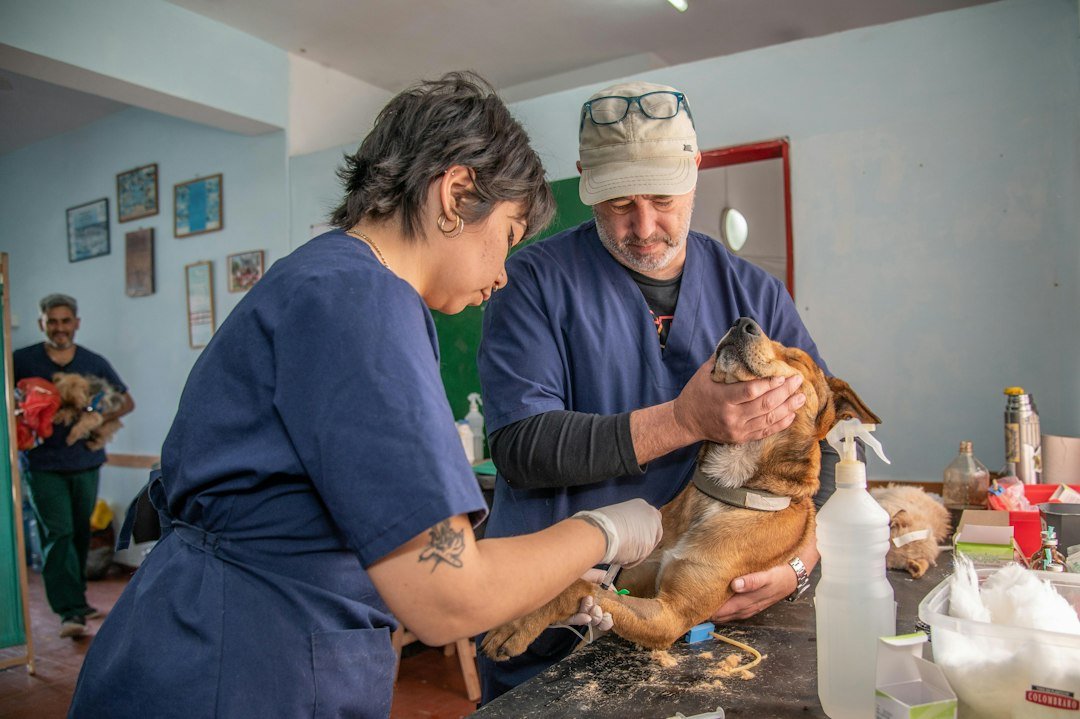
This guide explains where clindamycin fits in canine medicine, why it is often used for dental and bone infections, how food affects tolerance, which GI side effects owners may see, why culture matters after recurrence or treatment failure, and when vomiting, diarrhea or neurologic changes should trigger a call to the veterinarian.
What clindamycin is
Clindamycin belongs to the lincosamide class. It inhibits bacterial protein synthesis by binding to the 50S ribosomal subunit.
What kinds of bacteria it targets
It has useful activity against many gram-positive cocci and anaerobic bacteria, though local resistance patterns and individual culture results matter.
Why it is not suitable for every gram-negative infection
Its spectrum does not cover many aerobic gram-negative organisms that commonly cause urinary or other infections.
Why dental disease is a common indication
The oral cavity contains mixed aerobic and anaerobic bacteria, and clindamycin penetrates well into many oral and bone tissues.
Why antibiotics do not replace dental treatment
Periodontal pockets, fractured teeth and infected roots still require cleaning, extraction or other source control.
Why short-term improvement after antibiotics can be misleading
Swelling and pain may improve temporarily while the infected tooth remains in place and the problem later returns.
Why clindamycin may be used for osteomyelitis
Its tissue penetration and spectrum can make it useful for selected susceptible bone infections.
Why bone infections often need prolonged treatment
Bone heals slowly, penetration can be difficult, and biofilm or implants can complicate bacterial clearance.
Why culture is especially important in bone infection
Long courses increase the cost of choosing the wrong drug and the risk of resistance selection.
Why infected implants can still fail treatment
Biofilm on plates or screws can protect bacteria from antibiotics and immune cells.
Why source control may require implant removal
Some chronic orthopedic infections cannot be cured with antibiotics alone.
Skin and soft-tissue infections
Clindamycin may be used when the likely or cultured organism fits its spectrum, but recurrent skin disease should prompt investigation for allergy, parasites or endocrine disease.
Why skin cytology is useful
It can show whether cocci, rods or yeast are present before systemic antibiotics are chosen.
Why recurrent pyoderma should not be treated blindly
Repeated empirical courses increase resistance pressure and may miss methicillin-resistant staphylococci.
Abscesses
Clindamycin can be useful against anaerobic organisms, but abscesses often need drainage to resolve.
Why pus is a barrier to cure
Necrotic material and poor perfusion reduce antibiotic effectiveness inside closed pockets.
Wound infections
Bite wounds may involve mixed bacterial populations and can benefit from cleaning, drainage and culture when severe or recurrent.
Why a tiny puncture can hide deeper injury
Teeth can push bacteria under the skin while the surface wound closes quickly.
Protozoal and other specialized uses
Clindamycin is also used in some veterinary protocols for specific protozoal infections, though those indications require diagnosis and specialist dosing decisions.
Why the same dose concept does not apply across indications
Different organisms, tissues and treatment durations can require different exposure strategies.
Clindamycin dosage by weight: infection site changes the regimen
Current Merck references list clindamycin at 5–10 mg/kg by mouth every 12 hours as a general canine reference. For canine staphylococcal pyoderma, Merck lists 11 mg/kg once daily, while oral inflammatory disease references use a broader 5.5–33 mg/kg every 12 hours depending on the specific problem.
| Reference context | Published canine dose | Why it differs |
|---|---|---|
| General Merck reference | 5–10 mg/kg PO every 12 hours | Broad pharmacology context |
| Canine pyoderma | 11 mg/kg PO every 24 hours | Skin-infection regimen |
| Oral inflammatory / dental disease | 5.5–33 mg/kg PO every 12 hours | Wider indication-specific oral-disease range |
Sources: Merck lincosamide/macrolide pharmacology, Merck pyoderma guidance, and Merck oral-disease guidance.
A calculator cannot decide whether clindamycin is the right antibiotic, whether culture is needed or whether the infection requires drainage, extraction or other source control.
How clindamycin is given
It is available in capsules, tablets, liquids and compounded formulations depending on region and prescription.
Can clindamycin be given with food?
It is often given with food to improve GI tolerance, although the veterinary prescription should guide administration.
Why water after capsules can be useful
Ensuring a capsule reaches the stomach rather than lodging in the esophagus can reduce local irritation.
Why food does not eliminate all side effects
Vomiting, diarrhea or appetite loss can still occur and may require a different plan.
Common side effects
GI effects such as vomiting, diarrhea, soft stool and reduced appetite are among the most commonly reported problems.
Why diarrhea matters during treatment
Antibiotics alter the intestinal microbiome, and persistent diarrhea should not be treated automatically with another antibiotic.
Why probiotics may be used
Selected veterinary products may support stool quality, but they do not correct severe dehydration or a poorly tolerated antibiotic.
What to do if the dog vomits
Do not automatically repeat the full dose because absorption may already have begun. See Dog Vomiting After Antibiotics.
What to do if diarrhea develops
Monitor severity and hydration, and contact the veterinarian for persistent watery stool, blood, vomiting or lethargy. See Dog Diarrhea After Antibiotics.
Why antibiotic-associated diarrhea should not be dismissed
Some cases are mild, while others significantly reduce hydration, appetite or treatment adherence.
Why human GI side-effect warnings should not be copied directly to dogs
Clindamycin has well-known human associations with C. difficile disease, but veterinary GI disease patterns and risk assessment are not identical.
Why species-specific guidance matters
Dogs metabolize drugs differently and have different intestinal ecology, making direct human-to-dog assumptions unreliable.
Allergic reactions
Hypersensitivity is possible with any antibiotic.
Signs that need urgent attention
Facial swelling, hives, breathing difficulty or collapse can indicate a serious allergic reaction.
Why vomiting alone does not prove allergy
Simple GI intolerance is far more common and should be distinguished from systemic hypersensitivity.
Why liver disease belongs in the medication history
Clindamycin is metabolized hepatically, so significant liver dysfunction can affect drug handling and may require closer monitoring.
Why kidney disease still matters
Medically complex dogs often have several conditions and drugs that influence overall tolerance even when renal elimination is not the main route.
Why senior dogs need closer review
Age increases the likelihood of organ disease, dental disease and polypharmacy.
Why puppies need accurate current weights
Rapid growth can make an old weight inaccurate, especially during longer courses.
Why body weight is only one piece of dosing
Infection site, organism, disease severity and organ function all affect treatment decisions.
Drug interactions
Clindamycin can interact with drugs that affect neuromuscular transmission and may have antagonistic relationships with some other antibiotic classes.
Why the complete medication list matters before anesthesia
Dental procedures may involve anesthetic and neuromuscular-active medications, so the veterinary team should know clindamycin is being given.
Why erythromycin or related macrolides should be disclosed
They act at overlapping ribosomal targets and may create antagonistic effects in some contexts.
Why chloramphenicol should also be disclosed
It can compete at related bacterial ribosomal sites and may alter antimicrobial activity.
Why medication interactions are not a reason to stop treatment without advice
The veterinarian may simply choose a different antibiotic or sequence treatment differently.
Why culture matters after recurrence
A dog that relapses after clindamycin may have resistant bacteria, inadequate source control or a nonbacterial problem.
Why culture should ideally come from the true infection site
Surface swabs can grow contaminants that do not represent a deep lesion.
Why dental cultures are not needed for every routine case
Most periodontal disease is treated by source control, and culture is reserved for selected severe or refractory infections.
Why bone culture is more valuable
Deep infection often requires long treatment and has fewer opportunities for empiric trial-and-error.
Why susceptibility testing matters
It identifies whether the isolated organism is likely to respond to achievable clindamycin concentrations.
Why inducible resistance can matter in staphylococci
Some organisms appear susceptible initially but can express resistance under treatment pressure, which laboratories may evaluate with specialized testing.
Why methicillin-resistant staphylococci matter
MRSP infections may also carry resistance to clindamycin and several other common drugs.
Why switching blindly to a broader antibiotic is poor stewardship
Culture and source control are usually more informative than simply escalating spectrum.
Why antimicrobial stewardship matters
Clindamycin should be used when its spectrum fits, not because it is familiar or convenient.
Why broad oral infection coverage should not become chronic
Dental disease requires mechanical treatment and prevention, not repeated antibiotic courses indefinitely.
Why recurrent abscesses need investigation
Foreign material, bite wounds, dental roots or immune problems can drive recurrence.
Why treatment response should be objective
Track swelling, pain, drainage, appetite, temperature if instructed and functional improvement.
Why visible healing can lag behind bacterial control
Wounds and bone remodel slowly even after infection is improving.
Why worsening in the first day or two can still matter
Severe infection may progress despite appropriate therapy if source control is missing or sepsis is developing.
Why abscess size should be monitored
Increasing swelling or new drainage may indicate failure of source control.
Why dental pain should improve after definitive treatment
Persistent pain after extraction or cleaning may warrant recheck for retained roots or other complications.
How long should the course last?
Duration varies widely by indication. Deep bone infection can require much longer therapy than a superficial soft-tissue infection.
Why traditional fixed durations are being reconsidered
Modern stewardship favors the shortest effective course based on infection site and response.
Why stopping early without guidance can still be harmful
Persistent infection can relapse if treatment ends before adequate control is achieved.
Why the veterinarian may appropriately stop earlier than originally planned
Culture, side effects or reassessment can justify a revised duration.
Why leftovers should not be saved
A future infection may involve a different organism or require a different drug and duration.
Why clindamycin from another pet should not be shared
Weight, infection site, organ function and bacterial susceptibility differ among patients.
Why human clindamycin should not be substituted casually
Strength and formulation may be inappropriate even if the active ingredient is the same.
What if a dose is missed?
Do not double automatically. See Missed Dose.
What if a double dose is given?
Contact the veterinarian with the exact product and timing. See Double Dose.
Why secure storage matters
Keep all capsules and flavored forms where dogs cannot access the container.
When to call the veterinarian
Repeated vomiting, significant diarrhea, refusal of food, worsening pain, swelling or drainage deserves veterinary advice.
When urgent care is appropriate
Breathing difficulty, facial swelling, collapse, severe weakness, black stool or suspected major overdose requires prompt assessment.
What owners should track
- dose and time;
- food intake;
- vomiting or diarrhea;
- swelling and drainage;
- pain and appetite;
- missed doses;
- other medicines;
- signs of the original infection.
How this page fits DogMedsHub
This is the main medication page for clindamycin. Broader infection-selection principles remain on Antibiotics for Dogs and Bacterial Infections in Dogs.
The Merck Veterinary Manual discussion of lincosamides describes clindamycin’s spectrum, tissue penetration and important clinical-use principles.
Why clindamycin is especially useful when anaerobes are suspected
Anaerobic bacteria thrive in low-oxygen environments such as deep bite wounds, devitalized tissue and some oral infections. Clindamycin can be valuable when that microbiology fits the case.
Why anaerobic coverage does not replace drainage
A closed abscess still contains pus, low pH and damaged tissue that can limit antibiotic effectiveness. Opening and draining the pocket often determines whether treatment succeeds.
Why dental radiographs matter
Infected roots and bone loss may not be visible from the crown of the tooth. Imaging helps identify the true source of chronic oral infection.
Why jaw-bone infection needs a different plan from routine gingivitis
Osteomyelitis can require culture, prolonged treatment and sometimes surgery, while simple periodontal disease is managed primarily by professional dental cleaning and extraction where needed.
Why oral bacteria can be mixed
Dental infections commonly involve several organisms, so clinical context and source control matter more than assuming one named bacterium is responsible.
Why clindamycin is not a routine urinary antibiotic
Many urinary pathogens are gram-negative organisms outside its strongest spectrum, so use should follow culture rather than habit.
Why respiratory use is selective
Some anaerobic aspiration infections may fit its spectrum, but many bacterial pneumonias require different coverage or combination therapy.
Why aspiration source control matters
If megaesophagus, vomiting or swallowing dysfunction continues, pneumonia can recur regardless of antibiotic choice.
Why stool changes should be tracked from the first day
Knowing the dog’s baseline makes it easier to identify whether diarrhea begins immediately after treatment or develops later with cumulative microbiome disruption.
Why persistent appetite loss matters
A dog that cannot maintain food intake may not tolerate the drug well enough for a prolonged course, especially during bone or dental infection treatment.
Why liquid formulations can help some dogs
They may improve adherence when capsules are difficult, but concentration must be checked carefully because compounded strengths vary.
Why capsules should not be hidden dry in a dog’s mouth and forgotten
A small amount of water or food afterward can help ensure the capsule reaches the stomach instead of lingering in the esophagus.
Why medication aversion can develop
Repeated bitter or unpleasant dosing can make a dog avoid food used to hide pills. Changing administration strategy can preserve appetite and adherence.
Why treatment should be reassessed if pain persists
Persistent dental or bone pain can signal retained infection, inadequate source control or another diagnosis even when swelling improves.
Why fever may be absent in deep infection
Localized osteomyelitis or dental disease can be significant without systemic fever.
Why wound drainage can initially increase after opening an abscess
Improved drainage may release accumulated material; the important trend is whether swelling, pain and systemic illness then improve.
Why culture results can change treatment mid-course
Empirical clindamycin may be narrowed, stopped or replaced when susceptibility results identify a better choice.
Why inducible clindamycin resistance matters clinically
Some staphylococci carry mechanisms that can make apparent laboratory susceptibility unreliable unless specific testing is performed.
Why treatment failure should not trigger self-added antibiotics
Combining leftover amoxicillin, metronidazole or another drug can create unnecessary interactions and obscure culture results.
Why long courses increase the need for monitoring
When treatment extends for weeks, appetite, stool, body weight and infection-specific signs should be reviewed rather than assuming tolerance will remain unchanged.
Why a successful course should end with the source addressed
The strongest long-term result comes from removing the diseased tooth, draining the abscess, controlling allergy or correcting another underlying cause so the infection does not simply return.
Last reviewed: October 2026. Educational information only; clindamycin should be used for a defined susceptible infection under veterinary direction.