
Marbofloxacin is a prescription fluoroquinolone antibiotic used in dogs when a veterinarian has good reason to expect that the infecting bacteria are susceptible and that this drug is appropriate for the site of infection. It is not a “stronger antibiotic” to reach for when another medicine has not worked. The useful question is narrower: does this dog have a bacterial infection for which marbofloxacin is a sensible, evidence-based choice?
Dog Medication Math Calculator
Enter your dog’s current body weight, then use only the dose already provided by your veterinarian or pharmacy label. The calculator converts lb/kg and can work out mg and liquid mL. It does not choose or recommend a dose.
Dose information from your veterinarian
Optional liquid conversion
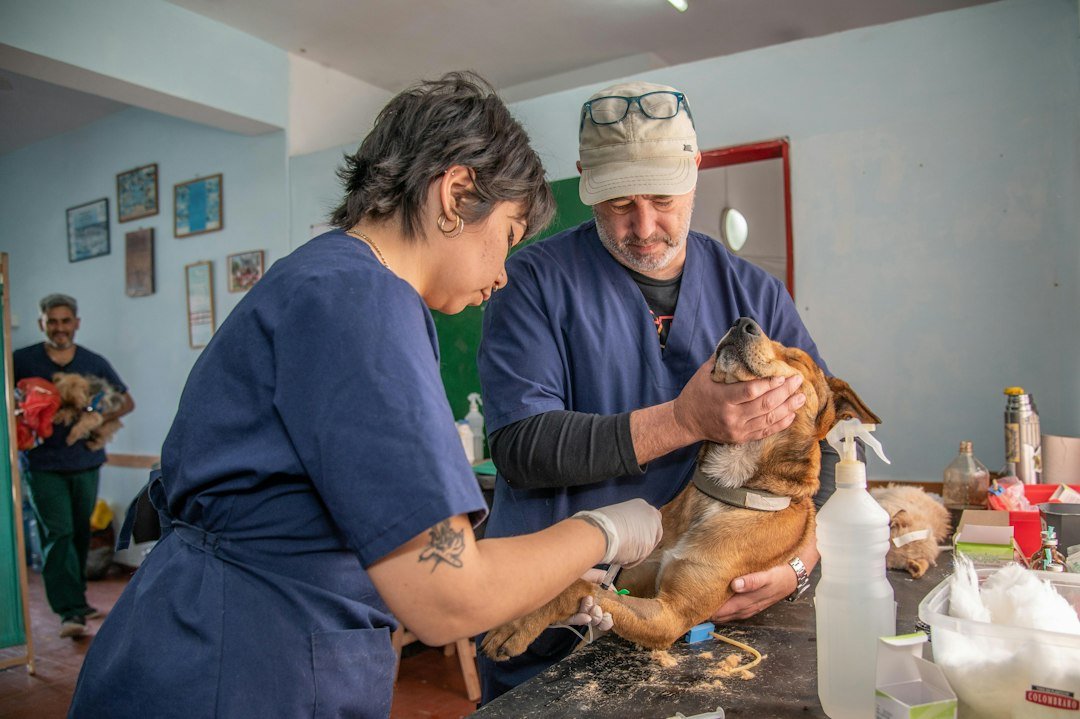
That distinction matters because fluoroquinolones are medically important antimicrobials. They can be extremely useful, particularly when tissue penetration or a resistant gram-negative organism makes them a good fit, but unnecessary exposure can select for resistance and make future infections harder to treat. This page focuses on marbofloxacin itself: where it may fit, what owners should know before the first dose, what can interfere with oral absorption, which adverse effects deserve attention, and what to do when an infection is not improving as expected.
What marbofloxacin is — and what it is not
Marbofloxacin belongs to the fluoroquinolone class. Drugs in this group interfere with bacterial enzymes needed for DNA replication. Their antibacterial effect is concentration-dependent, which is one reason accurate prescribing and reliable administration matter. A veterinarian chooses a regimen by considering the dog, the infection site, the likely or proven organism, susceptibility data, organ function and the approved product information. Body weight alone is not enough to make that decision.
In the United States, marbofloxacin products for dogs are prescription medicines. The FDA has approved brand and generic products for susceptible bacterial infections, and the agency has specifically noted that veterinary expertise is necessary to decide whether marbofloxacin is appropriate. That is a useful boundary for owners: online information can explain the medication, but it cannot establish that a particular cough, urinary problem, wound or skin flare is a marbofloxacin-responsive infection.
Marbofloxacin also should not be treated as interchangeable with every other fluoroquinolone. Enrofloxacin, ciprofloxacin and marbofloxacin share a drug class, but they are not identical in absorption, veterinary labeling, pharmacokinetics or susceptibility interpretation. If a previous fluoroquinolone “worked last time,” that does not prove it is the right choice for a new episode.
Why culture and susceptibility testing can change the treatment plan
A bacterial culture attempts to grow the organism from a properly collected sample. Susceptibility testing then helps the veterinarian judge which antimicrobials are likely to inhibit that organism. For recurrent urinary infections, deep wounds, rod-shaped bacteria on skin cytology, suspected resistant infections, previous fluoroquinolone exposure or treatment failure, that information can be much more valuable than choosing another broad-spectrum drug empirically.
Sample quality matters. A urine culture collected by cystocentesis is less likely to be confused by bacteria from skin or the lower urinary tract than a casually collected sample. A deep tissue sample may be more useful than a superficial swab. In pneumonia, airway sampling may sometimes provide better evidence than a nasal or throat swab. The goal is not “more testing for the sake of testing”; it is to reduce the chance of treating the wrong organism, contaminant or even a non-bacterial problem.
Susceptibility results also provide an opportunity to narrow therapy. If a more targeted antibiotic is appropriate, the veterinarian may decide not to use a fluoroquinolone even though the laboratory report lists it as susceptible. That is antimicrobial stewardship in practical terms: use an effective drug while avoiding unnecessarily broad exposure.
Situations in which a veterinarian may consider marbofloxacin
Urinary infections. Marbofloxacin may be considered when culture supports its use, especially in complicated or recurrent disease. Repeated cystitis in the same dog deserves more than repeated prescriptions. Stones, diabetes, urinary incontinence, anatomical abnormalities and prostate disease can all allow infection to return. Treating the underlying driver may be as important as selecting the antibiotic.
Prostatic infection. Fluoroquinolones can have useful tissue penetration, so they may be considered for susceptible bacterial prostatitis. In an intact male dog with recurring urinary infection, the prostate can act as a reservoir. That is why a seemingly simple “UTI that keeps coming back” may need a broader diagnostic work-up.
Skin and soft-tissue infection. Most routine superficial bacterial skin disease does not automatically call for a fluoroquinolone. Cytology can show whether bacteria are actually present and whether the pattern is more consistent with cocci, rods or yeast. Deep infection, resistant gram-negative organisms, draining tracts or a history of multiple antibiotic courses can make culture particularly useful. If a foreign body, diseased tissue or implant is maintaining the infection, medication alone may not solve it.
Selected respiratory or deep-tissue infections. A veterinarian may choose marbofloxacin when the organism, infection site and susceptibility profile make it a good fit. But every cough is not bacterial pneumonia. Airway collapse, chronic bronchitis, heart disease, viral disease and aspiration can produce respiratory signs that require very different treatment. Likewise, aspiration pneumonia will keep recurring if the cause of regurgitation or swallowing dysfunction is not addressed.
Marbofloxacin dosage by weight: current canine reference
Merck currently lists marbofloxacin in dogs at 2.75–5.5 mg/kg by mouth every 24 hours. For canine staphylococcal skin infection, Merck also lists 2 mg/kg once daily in its antistaphylococcal treatment table. These are reference values; the chosen dose still depends on susceptibility, infection site and patient risk.
| Reference context | Published canine guidance | Reader takeaway |
|---|---|---|
| General marbofloxacin reference | 2.75–5.5 mg/kg PO every 24 hours | Broad fluoroquinolone dosing context |
| Canine staphylococcal skin infection | 2 mg/kg PO every 24 hours | Infection-specific context; culture may change the plan |
| Young growing dogs | Extra caution | Fluoroquinolones can affect developing cartilage |
Sources: Merck quinolone dosing table and Merck antistaphylococcal treatment table.
What owners should know before the first dose
Give the clinic a complete medication and supplement list. Include prescription drugs, over-the-counter products, antacids, sucralfate, multivitamins, mineral supplements and any products containing iron, calcium, magnesium, aluminum or zinc. Fluoroquinolones can bind with certain minerals in the gastrointestinal tract, reducing the amount absorbed. The exact spacing depends on the product and treatment plan, so it is better to ask for a written schedule than to improvise.
Tell the veterinarian if the dog has a seizure disorder, significant kidney disease, is still growing, may be pregnant, is nursing, has previously reacted badly to a fluoroquinolone or is taking several other medications. These details do not always rule marbofloxacin out, but they can change the risk-benefit calculation and the monitoring plan.
If the dog is a puppy or adolescent, growth stage deserves particular attention. Fluoroquinolones have been associated with damage to developing articular cartilage in growing animals. FDA safety data for marbofloxacin include cartilage lesions in rapidly growing puppies exposed above the clinically effective range. A serious culture-proven infection can still justify a fluoroquinolone in a young dog when alternatives are poor, but that is a veterinarian’s decision, not a reason to self-start leftover tablets.
Giving marbofloxacin at home: practical details that prevent mistakes
Use the label on the current prescription and keep the tablets in their original container. The bottle identifies the strength, patient and instructions if an accidental ingestion occurs. If your household has several pets on medications, store each prescription separately rather than mixing tablets into a common organizer without labels.
Food may be used when a veterinarian recommends it for stomach tolerance, but mineral-containing products can be a separate issue. A dog taking sucralfate, an aluminum- or magnesium-containing antacid, iron, or a calcium-rich supplement may need carefully separated administration times. Ask the clinic to write those times down. A simple morning/evening schedule on the refrigerator is safer than trying to remember several spacing rules.
If a dose is missed, do not automatically double the next one. The right response depends on how late the dose is and how the prescription is scheduled. Our Missed Dog Medication Dose guide explains the general safety approach. If two doses are accidentally given or a dog chews into the medication container, contact the prescribing clinic or an animal poison service with the exact tablet strength, number of tablets and approximate time. See Dog Got a Double Dose of Medication.
Vomiting shortly after a dose creates another common trap: giving the full dose again because the tablet was not seen. Some or all of the medication may already have been absorbed. Unless the veterinarian has given specific instructions for this situation, call before repeating a dose. The same principle applies if a tablet is found partly dissolved in vomit.
Side effects: what is common, what is concerning
Gastrointestinal effects such as reduced appetite, vomiting or diarrhea can occur with antibiotics. A single mild episode in an otherwise bright dog is different from repeated vomiting, blood in the stool, worsening dehydration or refusal to eat. Persistent symptoms deserve a call because the dog may be reacting to the medication, the underlying disease may be worsening, or the original diagnosis may need to be reconsidered. Our related guides on vomiting after antibiotics and diarrhea after antibiotics explain what information is useful to collect before calling.
Neurologic signs are less common but more urgent. Fluoroquinolones can lower the seizure threshold in susceptible animals. New tremors, marked agitation, disorientation, unsteady walking or a seizure should not be dismissed as “the infection making him tired.” Contact a veterinarian promptly, and seek urgent care for a seizure, collapse, severe weakness or rapidly worsening neurologic signs.
Do not assume that every new symptom is caused by marbofloxacin. Fever, lethargy, appetite loss and pain can also reflect progression of the infection. The most useful question is whether the dog’s overall trajectory is improving, stable or deteriorating relative to the plan given by the veterinarian.
How to judge whether treatment is working
The expected signs of improvement depend on the disease. With a urinary infection, the owner may be tracking straining, frequency, accidents, discomfort and urine appearance. With pneumonia, the important observations may include respiratory effort, resting respiratory rate, appetite and energy. With a wound, drainage, swelling, heat and pain can be more informative than whether the dog simply seems brighter.
Ask the veterinarian what should improve first and when. This prevents two opposite mistakes: abandoning an appropriate treatment too early because everything is not normal immediately, or continuing a failing treatment for days because “antibiotics take time.” Some infections need repeat examination, imaging or culture even when the dog looks better. Others can be treated for a shorter period than owners may remember from older practices. Treatment duration should follow the diagnosed infection and the veterinarian’s current plan, not a generic number copied from another dog.
When an infection does not improve, do not simply increase the dose
Treatment failure has several possible explanations. The organism may be resistant. The sample may have represented contamination rather than the true infection. The drug may not reach the infected site well enough. A mineral interaction may be reducing absorption. Doses may have been missed. A foreign body, abscess, infected implant or devitalized tissue may require drainage or surgery. The illness may not be bacterial at all.
That is why re-examination and, when appropriate, repeat culture are more useful than owner-directed dose escalation. Giving more drug cannot overcome every resistance mechanism and can increase the risk of adverse effects. If the dog has had previous fluoroquinolone courses, re-culture becomes even more important because prior exposure can select less susceptible bacteria.
Marbofloxacin, resistance and the bigger stewardship picture
Fluoroquinolone resistance matters beyond a single prescription. Resistant organisms can circulate among animals, people and the environment. Owners play a practical role by using antibiotics only for the prescribed animal, not saving leftovers “just in case,” not sharing medication with another pet and returning for reassessment when the expected response does not occur.
Never substitute a human fluoroquinolone simply because it belongs to the same class. Ciprofloxacin, for example, does not have the same predictable oral absorption in dogs as some veterinary fluoroquinolones. Similarly, do not change from enrofloxacin to marbofloxacin—or the reverse—without veterinary direction. The fact that both names end in “-floxacin” is not a treatment plan.
For a broader explanation of resistance, culture and responsible antibiotic use, see Antibiotic Resistance in Dogs. That page covers stewardship across antibiotic classes; this page remains focused on marbofloxacin-specific decisions and safety.
A realistic owner scenario
Imagine a dog that has had three urinary “infections” in six months. The first two improved after empirical antibiotics. On the third episode, the veterinarian collects urine by cystocentesis and sends a culture. The result grows a bacterium with limited susceptibility, and marbofloxacin is one of the appropriate choices. At the same time, imaging identifies bladder stones. In that case, the antibiotic may be necessary, but it is only one part of the solution. Treating the stones and planning follow-up are what reduce the chance that the same cycle starts again.
Now consider a second dog with frequent urination but a negative culture. Giving marbofloxacin “because it worked before” could expose the dog to side effects and resistance pressure without treating the real cause. The symptom is the same; the appropriate action is different. That is why diagnostic context matters more than matching a drug to a symptom.
Questions worth asking the veterinarian
- Was this infection confirmed, or is treatment being started while results are pending?
- Was a culture obtained, and if not, what would make one necessary?
- Does my dog take sucralfate, antacids or mineral supplements that need to be separated from marbofloxacin?
- What improvement should I expect first, and by when?
- Which side effects mean I should stop and call rather than wait for the next appointment?
- Will a repeat culture, urinalysis, imaging study or recheck examination be needed?
- If the culture shows a narrower antibiotic will work, would the treatment plan change?
When to contact a veterinarian urgently
Seek prompt veterinary advice for repeated vomiting, severe diarrhea, marked appetite loss, worsening fever or pain, new tremors, unusual agitation, weakness or failure of the infection to improve on the expected timeline. Emergency assessment is appropriate for seizures, collapse, breathing difficulty, severe neurologic signs or a suspected large accidental ingestion.
If you are calling about a medication error, have the current bottle with you. The useful details are the drug name, tablet strength, how many tablets may have been swallowed, the dog’s weight, other medications and the approximate time of exposure.
How this page fits DogMedsHub
This is DogMedsHub’s main medication guide for marbofloxacin. The general Bacterial Infections in Dogs page explains infection diagnosis and treatment context, while Antibiotic Resistance in Dogs covers stewardship across drug classes. Keeping those roles separate avoids repeating the same general antibiotic material on every medication page.
Sources and review notes
The U.S. Food and Drug Administration describes marbofloxacin as a prescription fluoroquinolone used for susceptible infections in dogs and cats and notes the importance of veterinary oversight. FDA freedom-of-information material for Zeniquin also documents developmental cartilage concerns in rapidly growing puppies. The FDA overview of marbofloxacin approval and the FDA Zeniquin freedom-of-information summary are useful primary references.
Last reviewed: October 2026. DogMedsHub provides source-backed canine medication guidance and does not select an antibiotic or individualized dose for a specific dog. Marbofloxacin should be used only under veterinary direction.